






Wildcard Futures

People First

Smart Tourism Engineer

suitcase and globe

Hospitality, Events, & Tourism

Digital Technology

How can we make choices with people in mind?

By improving the visitor experience at famous places.

Smart tourism engineers trace how crowds move through busy destinations and redesign trouble spots before they become bottlenecks. Their challenge: keep visitors from feeling herded and keep locals from feeling overrun.
hands holding cell phone in front of marsh
Wildcard Futures video title card

The Quick Take

What's Happening?

At SC’s Congaree National Park, thousands of visitors come to see fireflies flash in sync, while a ticket lottery and designated trail help protect the fireflies’ habitat.

Why Now?

More pressure on tourist hotspots
+
Real-time crowd data
=
New ways to reduce traffic, long waits, and damage to historic places and ecosystems

What's Next?

Researchers are testing a computer model of Sintra, a popular vacation destination in Portugal, so planners can simulate traffic and crowd solutions before putting them into practice.

Today’s Jobs → Tomorrow’s Career

Even future careers have a backstory. This one starts before the crowds arrive.

Operations Research Analysts

Focus: the data

Studies numbers and patterns to find where a system is struggling and test better options

About $89k

Urban & Regional Planners

Focus: the place

Shapes how transportation, streets, and public spaces work for the people who use them

About $89k

Meeting, Convention & Event Planners

Focus: the experience

Coordinates what happens on-site so guests can move through an event smoothly

About $61k

Imagine these jobs coming together. Then ask them to make the whole destination – not just one piece of it – work better.

Quick reality check: These are national median salaries for current jobs. That means half of workers earn more, and half earn less. They are not starting salaries or guaranteed pay for this emerging career. As you gain experience or continue your education, your pay may grow too.

What the work could look like

A Day Could Look Like This:

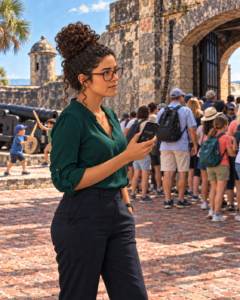
woman holding mobile phone9:15 AM — I spot an unusual pattern in the crowd.
From my desk above the visitor center, I can see the shuttle stop, the main gate of the historic fort, and the brick courtyard just inside it. The courtyard fills with people, and they slow to a shuffle.

A few minutes later, everyone is moving comfortably again. I check the visitor counts. The crowd spikes are almost perfectly spaced. Why every 20 minutes?

9:45 AM — I compare the shuttle and tour schedules.
Ah – there it is! The shuttle drops off a new group just as a guided tour leaves through the main gate, and they both fill the courtyard at the same time.

10:30 AM — I head downstairs to check the pattern in person.
Both the shuttle and tour group are right on cue. Then… families stop to pull up the map on their phones. They take selfies until they get one they like. Some visitors make a bathroom detour. Others linger to ask the guide extra questions.

For six minutes, people have to weave and squeeze past one another.

11:45 AM — Five minutes isn’t always five minutes.
The tour schedule says the group should clear the gate before the next shuttle arrives. The boys reenacting a battle scene near the cannon say otherwise.

I time the next few tours. What seemed like a comfortable gap on paper is not nearly enough time in person.

1:15 PM — I test a small scheduling shift.
With the operations team, I recommend trying a slightly later tour release. Then it’s back outside with my stopwatch.

3:30 PM — I see the difference a few minutes can make.
The next shuttle group crosses the courtyard before the tour comes through the gate. It still gets busy, but busy is not the same as bottlenecked.

I compare the morning and afternoon numbers, save my notes, and flag Saturday. That’ll be the real crowd test.


Step Into the Role

A fix in one place can create a problem somewhere else.

A popular historic district is packed for a weekend festival. One walking route is getting too crowded for people to move comfortably, but the easiest alternate route cuts through a residential neighborhood.

What would you do first?

A. Redirect visitors through the neighborhood.

Clears the busiest route quickly but sends crowds past homes →

You prioritized visitor flow.
B. Send visitors on a longer route through wider streets.

Gives residents more peace, but adds time to the walk →

You prioritized residents' quality of life.
C. Let people into the busiest area in smaller groups.

Eases crowding, but makes some visitors wait →

You prioritized managing the crowd at its source.
In real life, smart tourism engineers would weigh visitor movement against the effects a solution could have on residents and the rest of the destination.
One step further: What would you do if local businesses complained that your solution sent customers away from them?

You might like this if you're...

The Problem Solver

A problem doesn’t stop you for long – it gets you looking for another way.

The Organizer

Group project, birthday party, school dance – you’re the one keeping everything on track.

The Traveler

You’re looking up what to see and do before the trip is even booked.

The Optimizer

If an app can make something faster, easier, or smarter, you want to try it.

How Your Classes Connect

map pin on mountains and beach on cell phone
What you're learning now How you'd use it in this career

MATH — Using graphs to see how quickly something is changing

To detect when visitor numbers or wait times are rising faster than usual

COMPUTER SCIENCE — How apps follow rules and respond to what users do

To understand how digital maps can guide visitors away from busy areas

ENGLISH — Choosing the right details and wording for a specific audience

To write updates visitors can understand and act on quickly

SOCIAL STUDIES — How changes in a community affect its residents

To evaluate how tourism impacts the people who live and work in a place

Make Your Move

There’s single route through a busy destination – or into this emerging career.

Start at a South Carolina technical college

Choose the part of the work that interests you most.

Designing the Experience

Using the Tech

Healthcare

Add to your toolkit

Want to see what a map can reveal beyond directions? Esri’s Going Places with Spatial Analysis, an optional mapping and data analysis course, lets you use digital maps to uncover patterns and explore how location shapes decisions.

Explore a four-year option

An advisor can help you choose courses that could count toward a four-year college or university in fields like tourism management, data analytics, or urban planning.