
Next-Gen Health
Nano Medic

Healthcare & Human Services


Advanced Manufacturing
How can we rethink healthcare?
By changing how we treat the body.


The Quick Take

What's Happening?
Why Now?
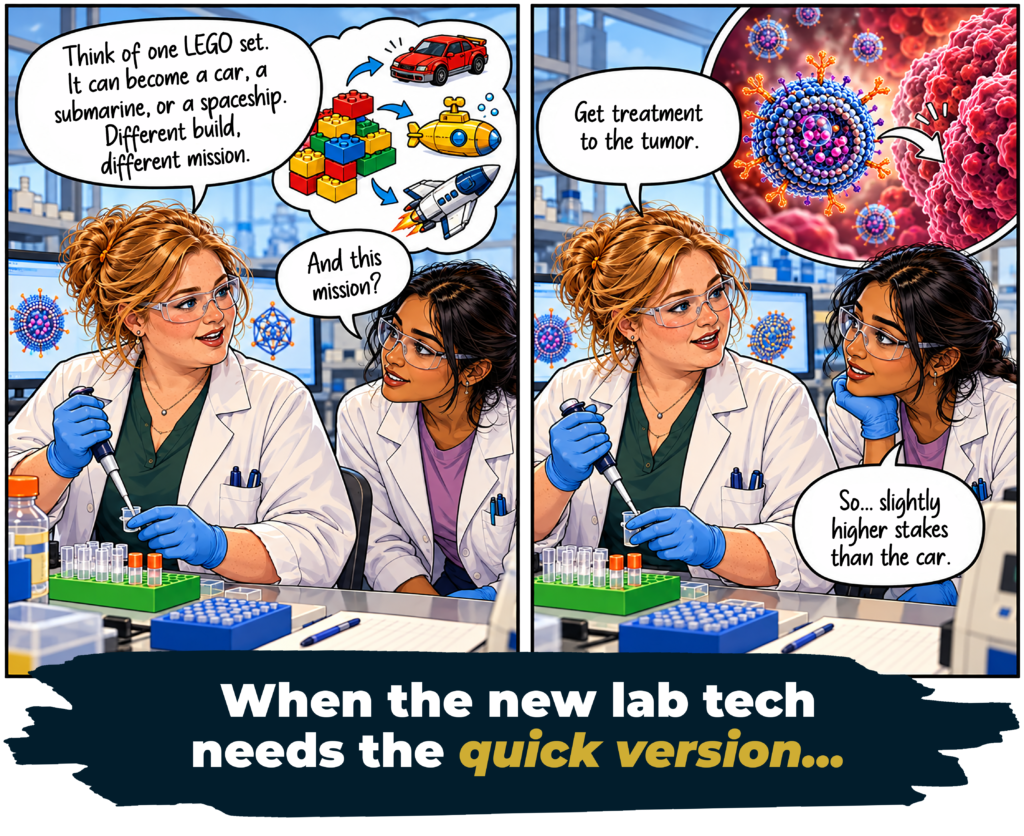
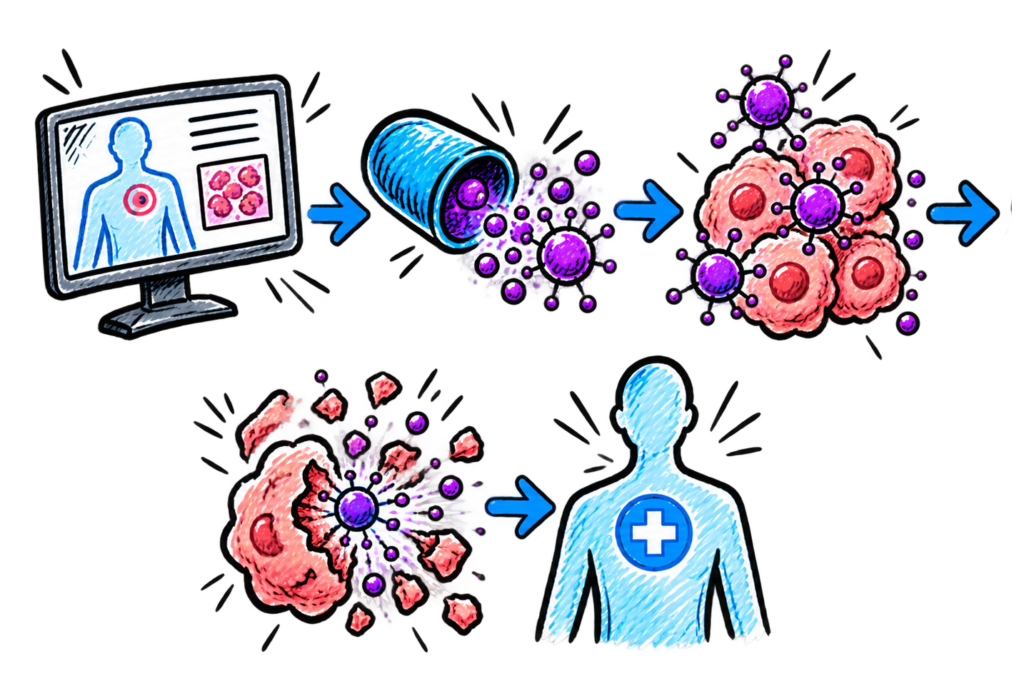
Medicines made from genetic instructions
+
Tiny carriers that help them enter cells
=
New ways to prevent and treat disease
What's Next?
Today’s Jobs → Tomorrow’s Career
Bioengineers & Biomedical Engineers
Focus: the design
Develops tiny medical materials that work safely inside the body
About $109k
Medical Scientists
Focus: the evidence
About $103k
Industrial Engineering Technologists & Technicians
Focus: the process
About $66k
Quick reality check: These are national median salaries for current jobs. That means half of workers earn more, and half earn less. They are not starting salaries or guaranteed pay for this emerging career. As you gain experience or continue your education, your pay may grow too.
What the work could look like
Step Into the Role
A tiny carrier can solve one problem – but create another.
Your team is comparing two tiny carriers designed to deliver the same cancer medicine. Carrier A gets more medicine into tumor cells, but it also leaves more medicine in the liver, where it could cause harm. Carrier B delivers less medicine to the tumor but leaves the body sooner, which may reduce the risk to healthy organs. Your team must decide whether to move one carrier forward to the next round of testing or design a new one.
What would you recommend?
→
→
→
In real life, nano medics would work alongside other researchers to repeat tests, track where each carrier travels, and weigh possible benefits against possible harm before deciding what moves forward.
You might like this if you're...
You’d rather build the model than listen to the lecture or study the diagram.
When everyone else says, “That didn’t work,” you’re already planning the next try.
You can lose an hour watching videos about, well, anything that catches your interest.

How Your Classes Connect

| What you're learning now | How you'd use it in this career |
|---|---|
|
MATH — Ratios, scales, interpreting data, and reading graphs |
To measure tiny materials and compare how carriers of different sizes perform |
|
SCIENCE — Cell biology and chemical reactions |
To study how tiny materials interact with cells and organs |
|
ENGLISH — Technical writing and explaining evidence |
To document tests so other teams can understand and repeat the work |
|
ENGINEERING & TECHNOLOGY — The design process and how materials are made |
To improve tiny medical materials and prepare them for reliable production |
Make Your Move


Nano medics may work at a tiny scale, but the path into this emerging career isn’t narrow.
Start at a South Carolina technical college
Choose the part of the work that interests you most.
Science + Labs
- Medical Laboratory Technology
- Introduction to Biotechnology Certificate
Engineering
- Engineering Fundamentals
- Biomedical Engineering
Automation
- Mechatronics Technology
- Electronics Engineering Technology
Add to your toolkit
If you’re preparing for biotechnology lab or production work, passing the Biotechnology Aptitude and Competency Exam (BACE) shows that you understand core science and how to apply it safely.
Explore a four-year option
An advisor can help you choose courses that could count toward a four-year college or university in fields like biomedical engineering, chemical engineering, materials science, or biology.