
Farm to Future
Agri-Robotics Technician
Agriculture


Advanced Manufacturing
How can we grow food in new ways?
By farming with smart machines.
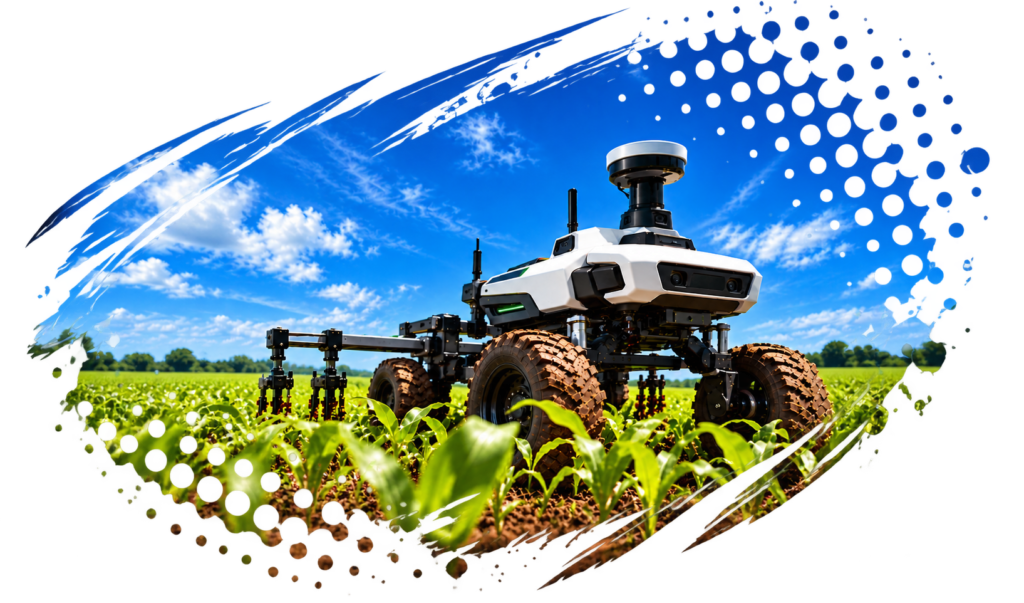
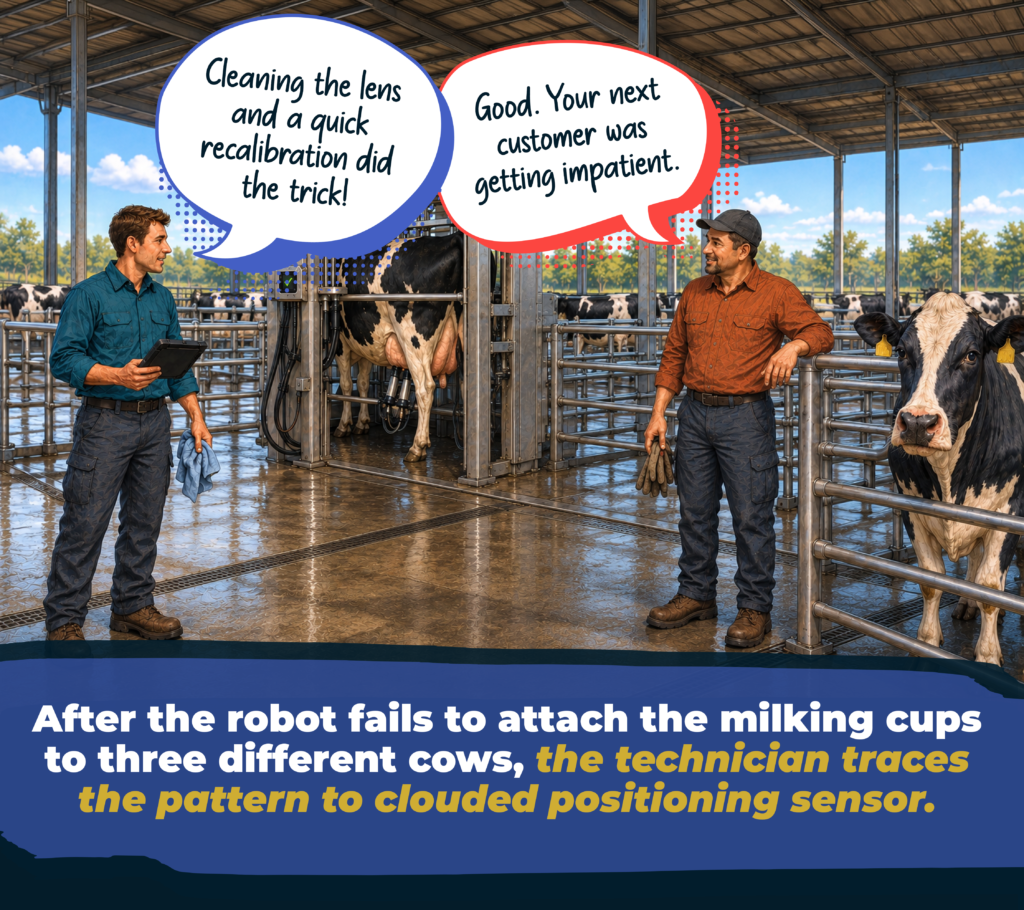
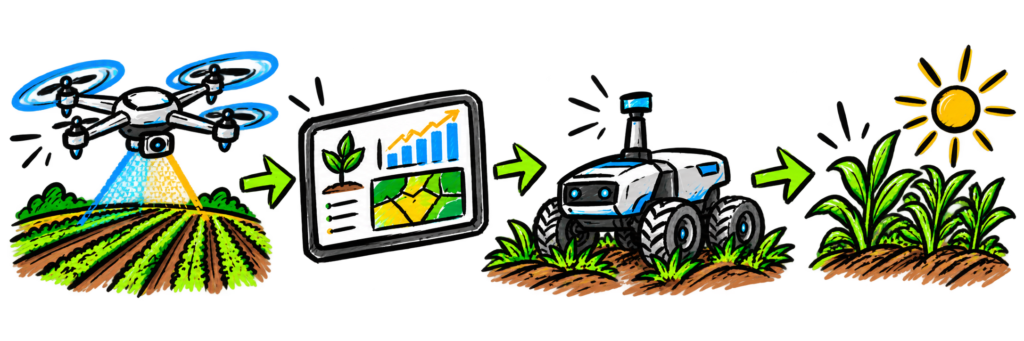
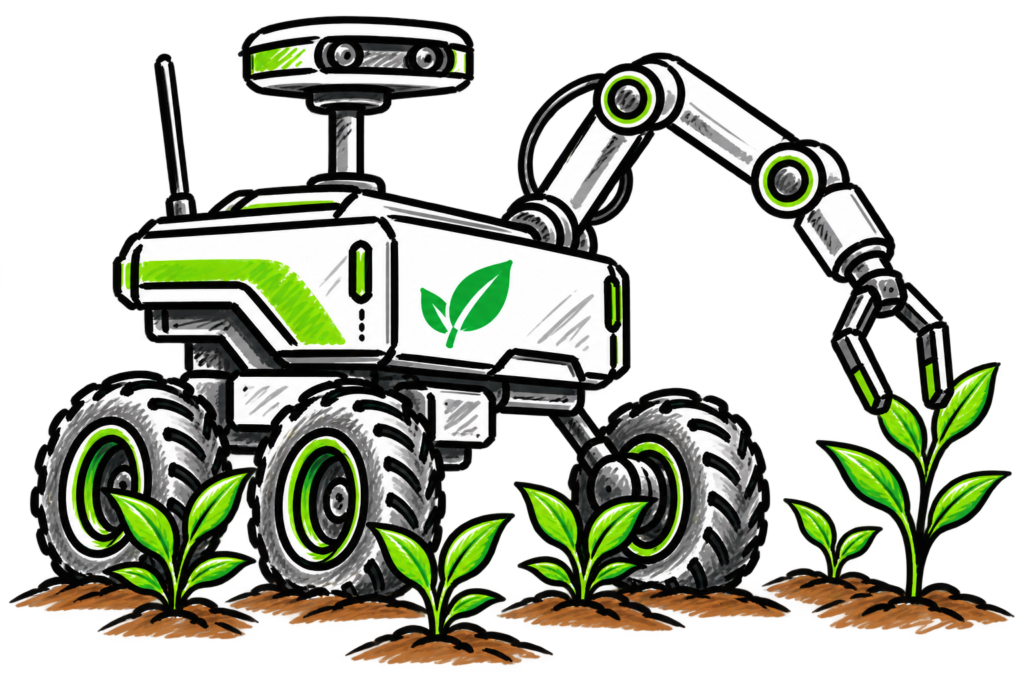
Agri-robotics technicians install and repair the systems that help farm machines steer, plant seeds, and spot crop problems – following the clues from a computer screen to a tractor stopped in the middle of a field.

The Quick Take

What's Happening?
Moving at speeds up to 16 miles per hour, John Deere’s camera-equipped sprayers can distinguish weeds from crops and target only the weeds.
Why Now?
Hard-to-fill farm jobs
+
Pressure to use resources carefully
=
More automation – and more equipment that needs technicians
What's Next?
Today’s Jobs → Tomorrow’s Career
Even future careers have a backstory. This one starts when a tractor problem can’t be solved with a wrench alone.
Farm Equipment Mechanics & Service Technicians
Focus: the machinery
Diagnoses breakdowns and gets tractors and harvesters back to work
About $57k
Electro-Mechanical & Mechatronics Technologists & Technicians
Focus: the robotics
Installs and tests the controls that tell robotic equipment what to do
About $74k
Agricultural Technicians
Focus: the crops
Collects and tests crop or soil samples to see what plants need in the field
About $50k
Quick reality check: These are national median salaries for current jobs. That means half of workers earn more, and half earn less. They are not starting salaries or guaranteed pay for this emerging career. As you gain experience or continue your education, your pay may grow too.
What the work could look like
Step Into the Role
The machine can stop. The growing season won’t.
You’re checking a sensor-guided planter that has begun leaving thin gaps in some rows. Heavy rain is expected by morning and could keep the planter out of the field for several days. Seeds planted later may sprout and mature behind the rest of the crop, making the field harder to manage and harvest. The farm manager asks whether to stop or keep planting.
What would you recommend?
→
→
→
You might like this if you're...
When a game controller stops connecting, your first thought is, “Let me take a look.”
You’d rather build the model than listen to the lecture or study the diagram.
You like moments when everyone has a role and your part keeps the whole team moving.
You notice the smallest background details before anyone posts the group photo.

How Your Classes Connect
| What you're learning now | How you'd use it in this career |
|---|---|
|
MATH — Measurements, ratios, and reading tables and graphs |
To determine accuracy of in-the-field seed spacing against the machine’s settings |
|
SCIENCE — Plant growth, weather, and ecosystems |
To understand what farm sensors measure and why those readings matter to the crop |
|
COMPUTER SCIENCE — Writing basic code |
To follow a machine’s instructions and identify a wrong setting or software error |
|
ENGINEERING & TECHNOLOGY — Building models and trying different designs |
To see how moving parts work together and test whether a repair works |
Make Your Move


Start at a South Carolina technical college
Choose the part of the work that interests you most.
Machines + Repair
- Diesel Equipment Technology/Diesel Engine Technology
- Diesel Technology (Caterpillar Program)
Robotics + Electronics
- Mechatronics Technology
- Electronics Engineering Technology
Farm Know-How
- Diversified Agriculture
Add to your toolkit
If you’ll fly drones as part of the job, you’ll likely need the FAA Remote Pilot Certificate, which is available starting at age 16. Manufacturer training is optional for technicians who service a specific brand’s equipment.
Explore a four-year option
An advisor can help you choose courses that could count toward a four-year college or university in fields like agricultural mechanization, mechatronics, and plant and environmental sciences.