
Industry Reimagined
3D Bioprinting Technologist
Advanced Manufacturing


Healthcare & Human Services
How can we create smarter solutions for the future?
By building new ways to repair the body.
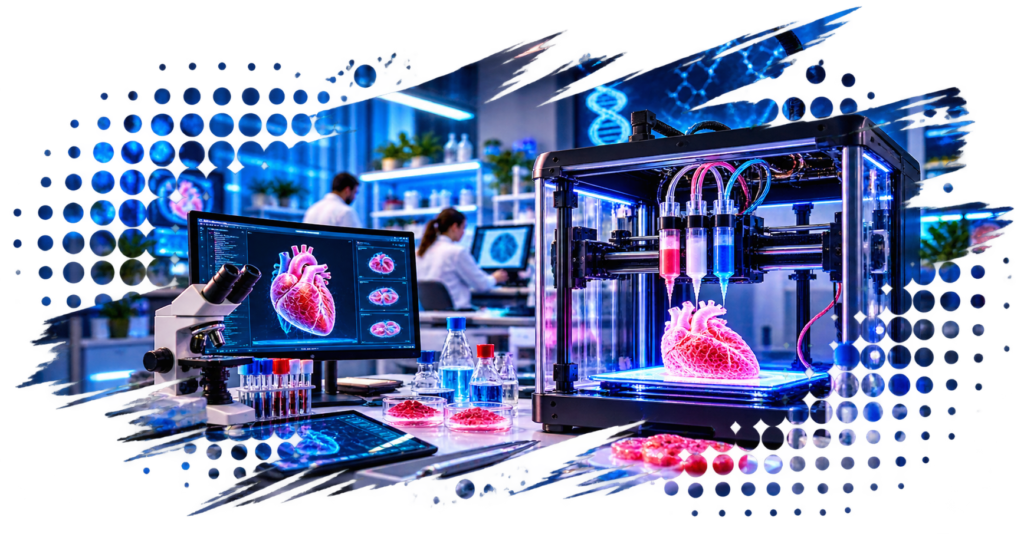

The Quick Take

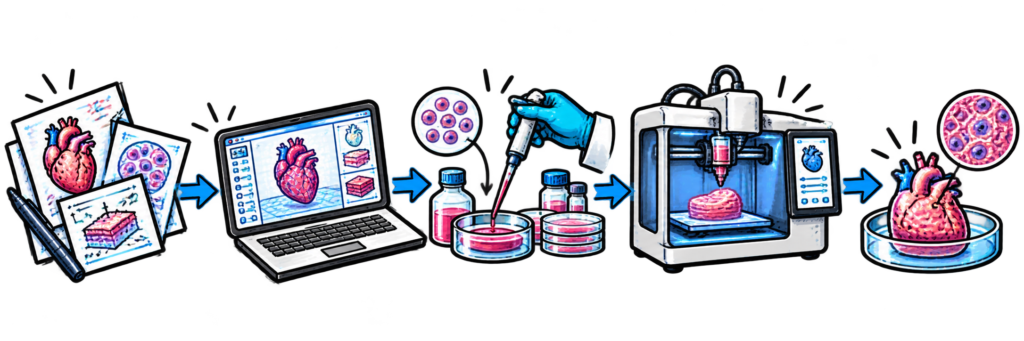
What's Happening?
Why Now?
Better ways to handle living cells
+
More precise 3D printing
=
More reliable tissue models for medical research
What's Next?
Today’s Jobs → Tomorrow’s Career
Bioengineers and Biomedical Engineers
Focus: the design
About $109k
Biological Technicians
Focus: the lab
Runs experiments carefully so researchers can collect reliable results
About $58k
Medical Scientists
Focus: the research
About $103k
Quick reality check: These are national median salaries for current jobs. That means half of workers earn more, and half earn less. They are not starting salaries or guaranteed pay for this emerging career. As you gain experience or continue your education, your pay may grow too.
What the work could look like
Step Into the Role
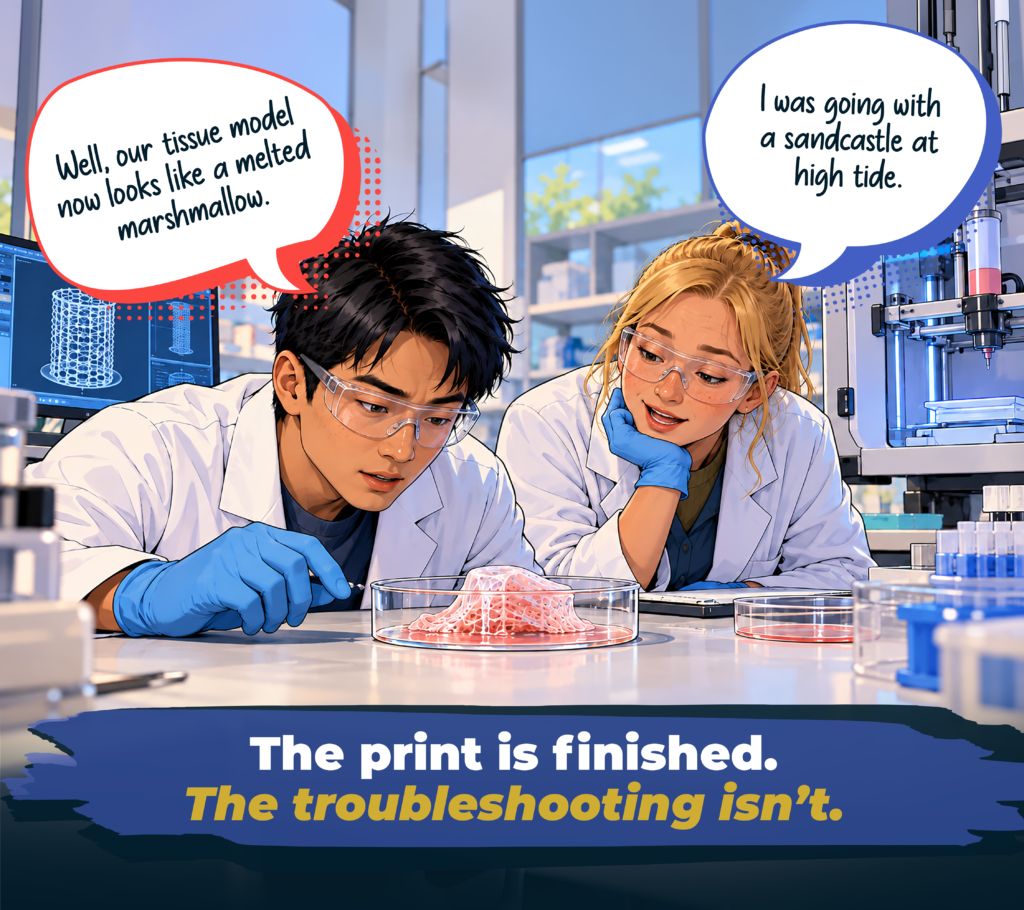
A tiny mistake can grow with every layer.
You’re helping print a tissue model for a medical study. Halfway through, the printer starts placing some cells slightly off target. The model is still usable so far, but the pattern is getting less accurate.
What would you do?
Lose time and materials but protect accuracy. →
Take more time but try to correct the placement without starting over. →
Save the current model but accept more uncertainty. →
You might like this if you're...
You notice the one tiny detail everyone else missed – and immediately want to fix it.
When everyone else says, “That didn’t work,” you’re already planning the next try.
You pay attention to injuries and what it takes to get an athlete back in the game.
Give you an idea and some materials, and you want to see what you can make from them.

How Your Classes Connect
| What you're learning now | How you'd use it in this career |
|---|---|
|
MATH — Using measurements to track changes in size or shape |
To spot when a print starts drifting away from the intended result |
|
SCIENCE — How cells work together to form tissues |
To understand what living cells need to survive and function in a tissue model |
|
ENGLISH — Explaining what happened in a clear, organized way |
To write notes that help a team member understand what changed during a print |
|
ENGINEERING & TECHNOLOGY — Testing a design and improving what doesn’t work |
To adjust the printer when the shape or material isn’t behaving as planned |
Make Your Move


There’s no single blueprint for this emerging career.
Start at a South Carolina technical college
Choose the part of the work that interests you most.
Lab Work
- Medical Laboratory Technology
- Introduction to Biotechnology Certificate
3D Design + Printing
- Biomedical Engineering
- 3D Printing (Additive Manufacturing Certificate)
Automation
- Mechatronics Technology
- Computer Numerical Control (CNC) Programming & Operations
Add to your toolkit
Already taking biotechnology or lab-science classes? The optional BACE credential can show what you know about working safely and accurately in a biotech lab – especially if you’re building toward lab-based work.
Explore a four-year option
An advisor can help you choose courses that could count toward a four-year college or university in fields like biomedical engineering, biotechnology, or biochemistry.