
Planet Forward
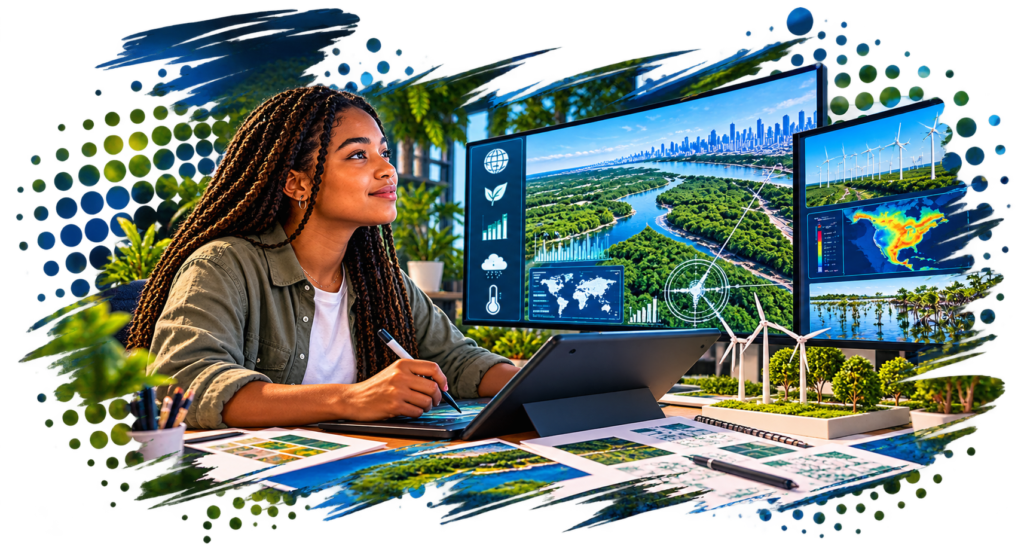
Interactive Climate Designer

Arts, Entertainment, & Design


Energy & Natural Resources
How can we take care of our planet?
By visualizing climate risks so people can plan ahead.
The Quick Take

What's Happening?
Why Now?
More local climate data
+
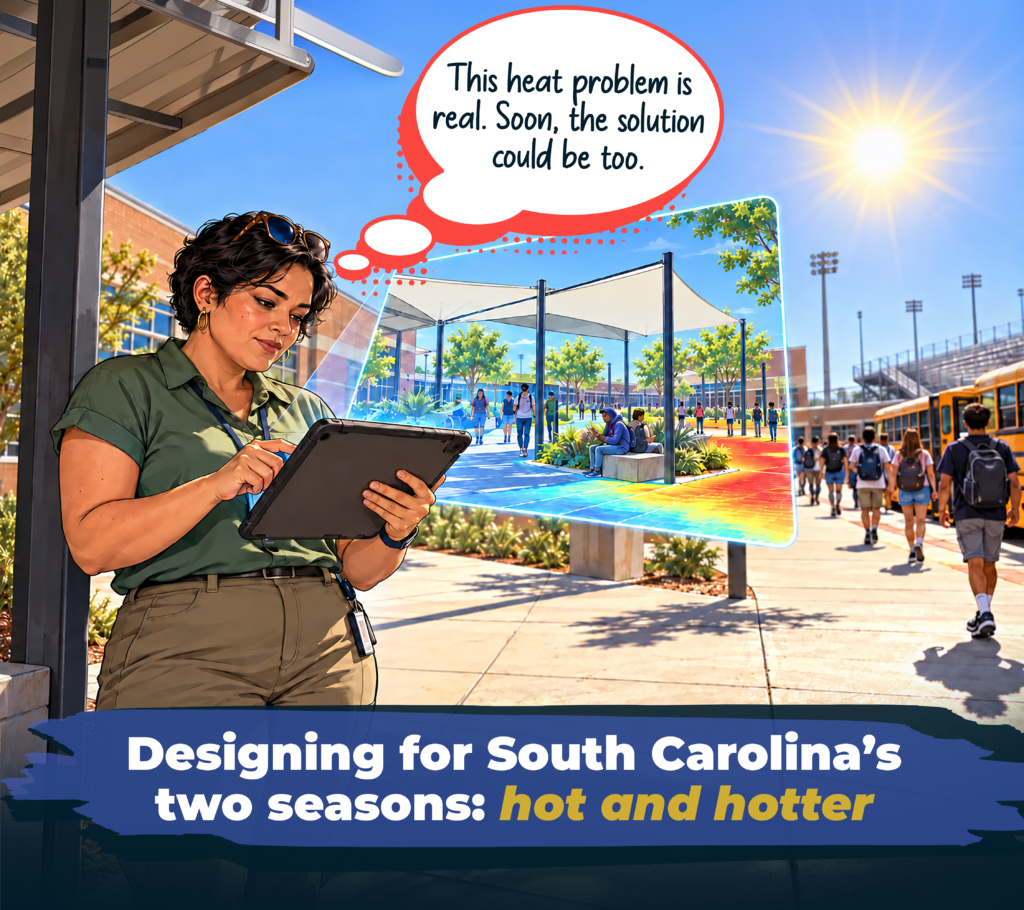
Interactive tools on everyday devices
=
A clearer look at climate risks – before they become harder to handle
What's Next?
Destination Earth plans to connect its separate weather, land, and water models into one digital Earth – giving interactive climate designers a bigger world to explore.
Today’s Jobs → Tomorrow’s Career
Even future careers have a backstory. This one starts with jobs that already turn data, maps, and digital worlds into something people can explore.
Special Effects Artists & Animators
Focus: the worldbuilding
About $102k
Cartographers & Photogrammetrists
Focus: the location
Turns geographic data and imagery into accurate maps of real places
About $81k
Web & Digital Interface Designers
Focus: the interaction
About $104k
Imagine these jobs coming together. Then add climate science.
What the work could look like
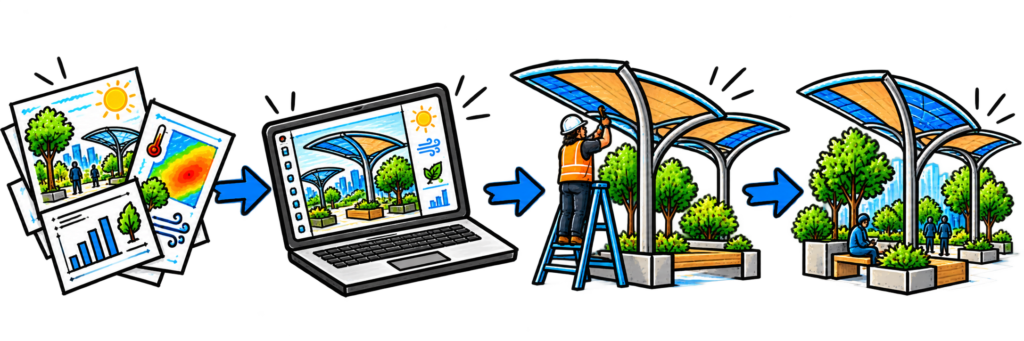
Step Into the Role
Even though a simulation can make the future feel real, no one knows exactly what will happen.
You’re building an interactive flood simulation for a coastal neighborhood. One scenario shows water reaching several streets, but the exact amount depends on the storm and future sea levels.
How would you show the risk?
Gets attention, but may make the risk feel more certain →
Keeps things realistic, but leaves other possibilities out →
Shows the range, but gives users more to sort through →
You might like this if you're...
You can picture a whole setting from one tiny detail.
When everyone else says, “That didn’t work,” you’re already planning the next try.
You love seeing how a few cuts, transitions, or before-and-after shots can change the whole story.
You want to see the picture on the box, not just one puzzle piece.

How Your Classes Connect

| What you're learning now | How you'd use it in this career |
|---|---|
|
MATH — How to spot patterns and changes in data |
To compare scenarios and see how changing one number changes the result |
|
SCIENCE — How weather and climate shape the places people live |
To show what changing conditions could realistically do to a place |
|
ENGLISH — Explaining an idea clearly and choosing the details that matter most |
To decide what users need to know as a scenario unfolds |
|
COMPUTER SCIENCE — How instructions and user input make a program respond |
To make a simulation react to what a user selects |
Make Your Move


There’s no single route into a career built around possible futures.
Start at a South Carolina technical college
Choose the part of the work that interests you most.
Design + Media
- Digital Arts
- Media Arts Production
Coding + Tech
- Computer Programming
- Computer & Information Technology
Land + Layouts
- Civil Engineering Technology
- Surveying Certificate
Add to your toolkit
Unity Certified User: VR Developer is an optional credential for students interested in building interactive 3D experiences. After learning the basics of Unity – and completing Algebra I! – you can use the certification to show what you know.
Explore a four-year option
An advisor can help you choose courses that could count toward a four-year college or university in fields like digital media, computer science, or environmental geosciences.