




Planet Forward

Ecotourism
Guide

suitcase and globe

Hospitality, Events, & Tourism

graduation cap and books

Education

How can we take care of our planet?

By exploring nature responsibly.

Ecotourism guides lead groups through parks, forests, and waterways, helping visitors spot the stories hiding in a landscape. They choose routes and set boundaries – so the group’s adventure doesn’t become nature’s problem.

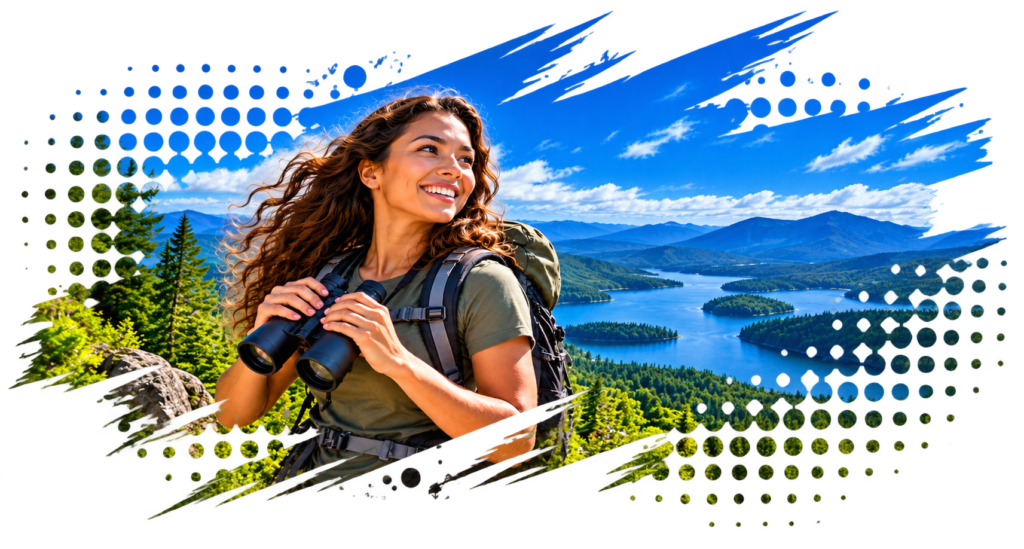
woman holding binoculars
Wildcard Futures video title card

The Quick Take

What's Happening?

For more than 25 years, naturalists near Charleston have brought marine life aboard for a closer look, turning boats into floating classrooms.

Why Now?

As travel grows, so does pressure on natural places. More than 2 in 3 travelers want to leave the places they visit better than they found them – and ecotourism guides can help.

What's Next?

70 miles. One river. Eleven park locations. SC’s first river-spanning state park is now open along the Black River – and creating brand-new opportunities for guided exploration.

Today’s Jobs → Tomorrow’s Career

Even future careers have a backstory. You can already see the work behind this one on tours, in parks, and across protected lands.

Tour & Travel Guides

Focus: the story

Makes each stop mean something, so the trip feels like more than a route on a map

About $38k

Recreation Workers

Focus: the group

Adjusts outdoor activities as the group’s needs or conditions change

About $37k

Conservation Scientists

Focus: the place

Protects natural resources and helps people enjoy land without damaging it

About $73k

Imagine these jobs coming together. Then invite visitors to become protectors of the place – not just guests.

Quick reality check: These are national median salaries for current jobs. That means half of workers earn more, and half earn less. They are not starting salaries or guaranteed pay for this emerging career. As you gain experience or continue your education, your pay may grow too.

What the work could look like

A Day Could Look Like This:

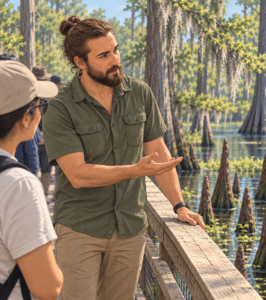
man giving outdoor tour8:20 AM — There’s a question I didn’t see coming.

On the morning tour, I point out the bald cypress knobs — often called “knees” — rising around the trunks.

“What are they actually for?”

Huh. I know the explanation I’ve always heard, but I don’t know how accurate it is.

Twenty minutes of questions about snakes, birds, and swamp water, and it’s a tree root that stumps me. 😉

9:40 AM — Now I can’t stop seeing cypress knees.
For the rest of the route, I look more closely. Some knees are tall. Others barely break the surface. Water surrounds some and not others.

I jot the question down to research before my next tour.

11:15 AM — I do my homework. The answer gets more interesting.

Between tours, I check our resources and talk with a naturalist. Researchers have ideas about what cypress knees do, including helping with gas exchange or support, but there isn’t one proven answer that explains everything.

That changes what I want to do this afternoon.

1:45 PM — I give the swamp the first word.

This morning, I started by telling the group what the knees might do. This time, I ask visitors to look first.

What do they notice? What do they think those strange knobs could be doing?

Their guesses lead us to roots, water, stability — and what scientists are still trying to understand.

The questions keep coming.

4:05 PM — I update more than my notes.
I’ll make sure I don’t present a theory as settled fact. I’m changing my approach to the tour, too.

Tomorrow, the group gets to ask questions first and learn what researchers think second.

Who knows? They may surprise me again.

Step Into the Role

The closer the view, the greater the risk. 

Your kayak group reaches a planned beach stop and spots nesting shorebirds nearby. The beach is open, but getting  too close could disturb the birds. Your guests are excited and expect to get out. 

What would you do? 

A. Keep the stop, but set a firm viewing boundary.

→

You prioritized access with clear limits.
B. Move the group to another beach.

→

You prioritized giving the wildlife more space.
C. Stay in the kayaks and watch briefly from a safe distance.

→

You prioritized preserving part of the experience with less disturbance.

In real life, ecotourism guides follow wildlife rules, watch how animals respond, and adjust the plan before the group gets too close.

One step further: What would you say to a guest who insists they paid to get closer?

You might like this if you're...

The Observer

You notice the little things everyone else misses.

The Outdoorsy One

Your ideal Saturday would include fresh air, hiking boots, muddy tires, or sea salt spray.

The Natural Leader

You keep group projects moving without making it all about you.

The Storyteller

You’re the friend everyone asks to tell the story again.

How Your Classes Connect

sketch of hiker in mountains
What you're learning now How you'd use it in this career

PHYSICAL EDUCATION — Teamwork and pacing yourself during physical activity

To adjust the tour plan for heat, rough terrain, or changing energy levels

SCIENCE — Habitats, food webs, and animal behavior

To answer questions about wildlife and show how species depend on one another

ENGLISH — Speaking to an audience and using vivid details in writing

To bring accurate facts to life for different groups of visitors

SOCIAL STUDIES — Maps, local history, and how communities change over time

To connect a landscape’s past with what visitors see there today

Make Your Move

There’s no single trail into this emerging career – and that’s kind of the point.

Start at a South Carolina technical college

Choose the part of the work that interests you most.

Visitor Experience

Nature + Wildlife

Business

Add to your toolkit

Starting at age 16, you can take Interpretive Guiding to learn how to turn facts into a tour people remember or Wilderness First Aid to prepare you for emergencies when help is far away. Neither is required for every guide, though some employers may require safety training.

Explore a four-year option

An advisor can help you choose courses that could count toward a four-year college or university in fields like parks, recreation, and tourism management; hospitality and tourism management; or environmental science.