
Power Under Pressure
Medical Drone Coordinator

Supply Chain & Transportation


Digital Technology
How can we act when the stakes are high?
By responding when time matters.
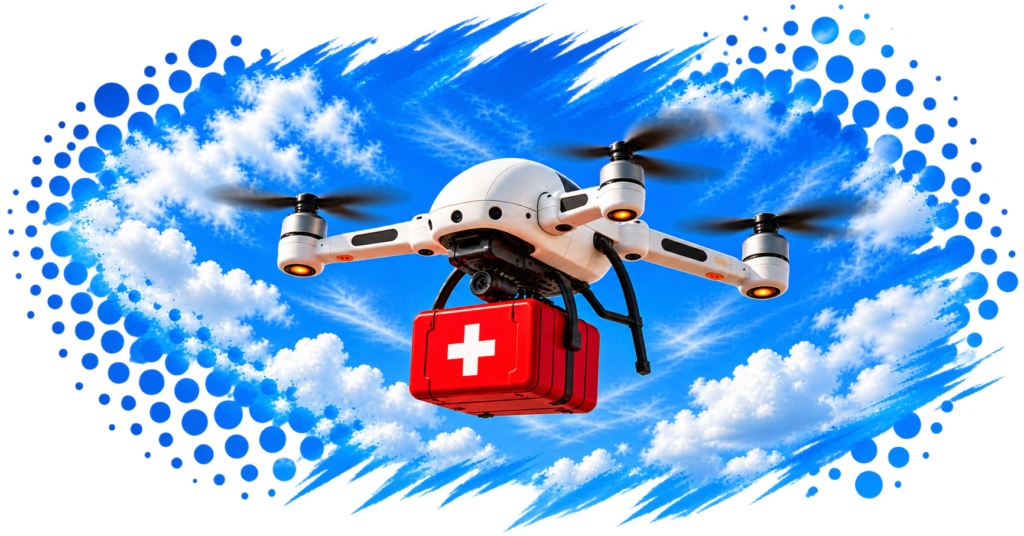
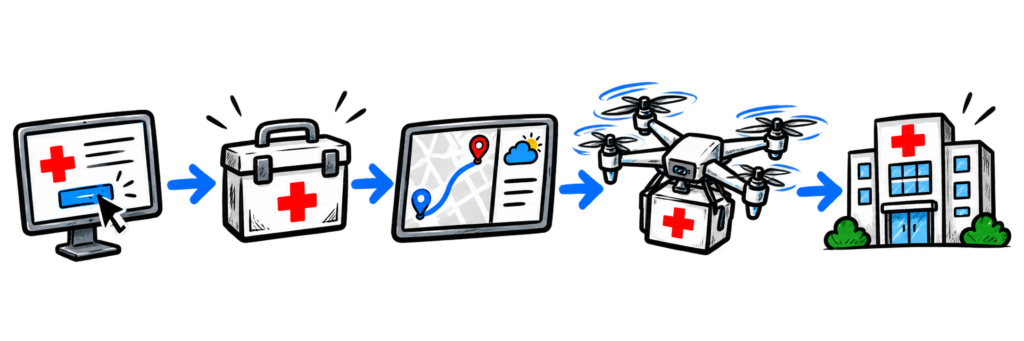
Medical drone coordinators plan and manage critical drone deliveries – like blood, lab samples, and medication – between hospitals, labs, and care centers. When every minute matters, the fastest route may be straight up.

The Quick Take

What's Happening?
Why Now?
Farther-flying, more automated drones
+
Proposed new rules that broaden where pilots can fly
=
More medical delivery routes within reach
What's Next?
Today’s Jobs → Tomorrow’s Career
Even future careers have a backstory. This one starts with jobs that already keep deliveries moving and healthcare running.
Dispatcher
Focus: the urgency
Adjusts plans in real time to keep time-sensitive deliveries moving
About $50k
Logistician
Focus: the strategy
Plans how supplies move from start to finish – and how the whole system could work better
About $82k
Medical & Health Services Manager
Focus: the care
Keeps healthcare running smoothly so patients get the care they need
About $124k
Imagine these jobs coming together. Then add a drone.
Quick reality check: These are national median salaries for current jobs. That means half of workers earn more, and half earn less. They are not starting salaries or guaranteed pay for this emerging career. As you gain experience or continue your education, your pay may grow too.
What the work could look like
Step Into the Role
The shortest route is not always the best route.
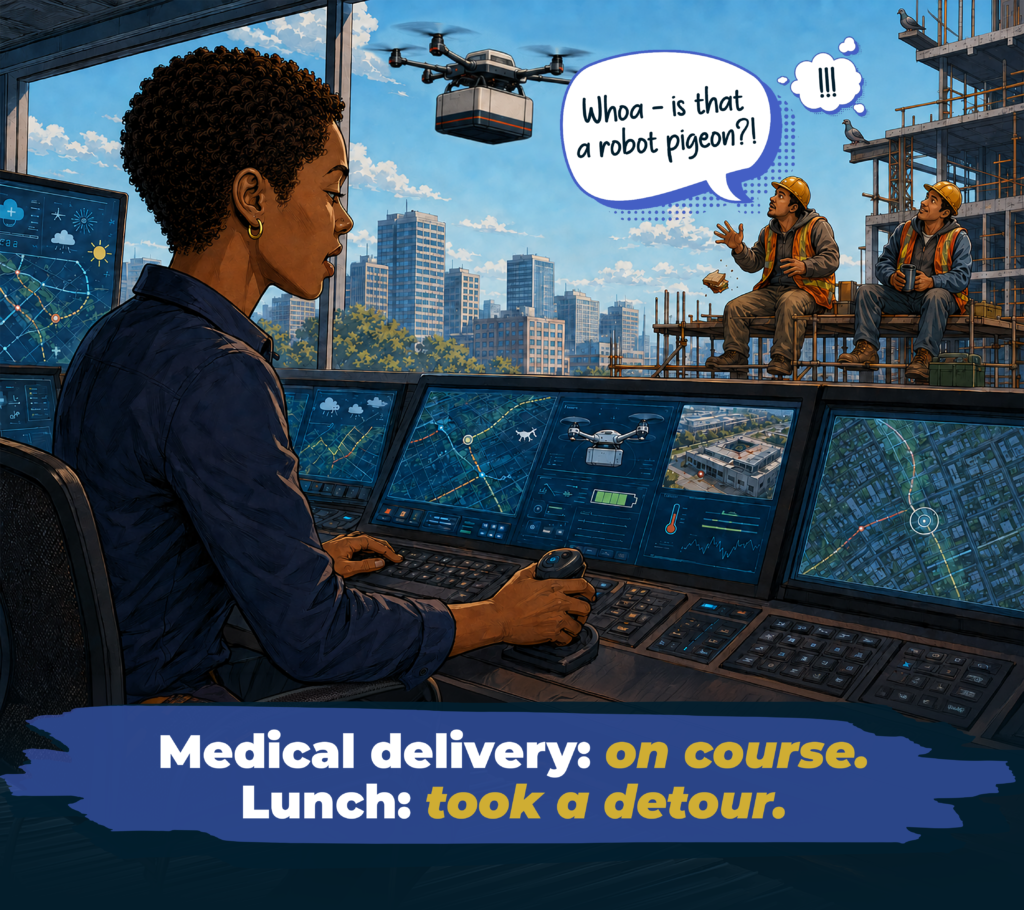
You’re coordinating a drone carrying an urgent blood sample to a hospital lab. Partway through the mission, strong winds move toward the flight path.
What would you do?
Fastest route, rougher conditions →
More stable flight, later arrival →
Avoid the wind, but traffic could add time →
In real life, medical drone coordinators would weigh the medical urgency, safety rules, and backup options before making the call.
One step further: What risk would you consider first?
You might like this if you're...
You think a few moves ahead and always have a Plan B ready.
A tough challenge makes you want to dig in – not back down.
You’d rather make a difference than make a big entrance.
A ticking clock makes you focus – not freeze.

How Your Classes Connect
| What you're learning now | How you'd use it in this career |
|---|---|
|
MATH — Those word problems about speed, distance, and time |
To compare routes and estimate how long a delivery could take |
|
SCIENCE — Weather systems, force, motion, and energy |
To consider how wind, temperature, and battery power could affect a flight |
|
ENGLISH — Summarizing, explaining your reasoning, and writing clearly |
To share clear, accurate updates with pilots and medical teams |
|
SOCIAL STUDIES — Maps, government, laws, and how communities work |
To make sense of airspace rules and how routes affect communities |
Make Your Move


There’s no single flight plan for this emerging career.
Start at a South Carolina technical college
Choose the part of the work that interests you most.
Drones + Flight
- Unmanned Aircraft Systems/Drone Technology
- Aircraft Maintenance Technology
Logistics
- Supply Chain Management
- Logistics
Healthcare
- Health Information Management
Add to your toolkit
An FAA Part 107 Remote Pilot Certificate shows employers that you understand the rules for commercial drone flight. And the best part? You can qualify starting at age 16.
Explore a four-year option
An advisor can help you choose courses that could count toward a four-year college or university in fields like aviation management, supply chain management, or healthcare administration.